
What are ISO Containers?
Unsure about what an ISO container actually is? Don’t worry – we promise it’s not rocket science! Here’s all you need to know.

First things first – what is an ISO container?
An ISO container is a shipping container that has been manufactured to internationally recognised standards set by the International Organisation for Standardisation (ISO). These standards ensure containers can be safely transported, stacked and handled across ships, trains and road vehicles worldwide.
Thanks to their versatility and efficiency, ISO containers are commonly used for global freight transport, secure storage and container conversion projects because their dimensions, strength and specifications are standardised internationally.

20ft New (One Trip) Container in Blue
What Does ISO Stand for in Shipping Containers?
The acronym ISO stands for International Organisation for Standardisation. The organisation doesn’t actually manufacture shipping containers but rather sets the standards and rules each cargo unit must comply with.
ISO containers are renowned for their solidity and sturdiness, as they are designed to withstand harsh, adverse weather. This is because they are usually adopted to carry items aboard trains and boats that leave them exposed to all kinds of conditions.
So, if you’re thinking about getting a shipping container to store your items and work equipment, rest assured that your tools will be kept safe all year round.
History of ISO Containers
The modern ISO container was developed in the mid-1950s, when international standards were introduced to make container transport more consistent and efficient. Since then, ISO containers have been the standard units for global shipping, with set dimensions, strength requirements and handling specifications that allow goods to move safely across different transport networks.

20ft New (One Trip) Container in Green
What are the ISO Standards?
As mentioned, the ISO establishes the official standards for shipping containers, ensuring both safety and compatibility when carrying items and goods.
The ISO lists a wide range of standards that containers need to abide by, but some of the most noticeable ones include:
- ISO 668:2013 – This standard indicates the base dimensions of shipping containers so that they can be consistently stacked, transported, and handled all over the globe.
- ISO 6346 – This standard sets the right coding, marking, and identification for shipping containers. Each container requires a unique identification code, allowing professionals to track its whereabouts at all times.
- ISO 1496 – This standard established the structural integrity of each shipping container, ensuring it’s able to withstand all weather conditions.

20ft New (One Trip) High Cube Container in Green
Why are ISO Standards Important?
ISO standards ensure shipping containers can be transported between different countries, ports and transport networks without compatibility issues. They also help maintain consistent dimensions, structural integrity and safety standards across the global shipping industry.
Features of ISO Containers
To ensure the safety of goods and items stored within them, ISO containers are designed with a few handy features.
In addition to presenting heavy-duty locking mechanisms to avoid theft and tie-down points to secure goods during transit, ISO containers are fitted with ventilation and forklift pockets.
When it comes to ventilation, shipping cargos have holes or vents that allow air to circulate inside the container. This actively prevents the build-up of condensation, reducing the risk of damage to the goods or equipment stored in the unit.
As for forklift pockets, every ISO container is equipped with pockets on the bottom corners that enable forklift trucks to lift and move the unit with ease.

20ft New (One Trip) Container in Green
Benefits of an ISO Container
Whether it’s for transportation or storage requirements, ISO containers can bring a wide range of benefits. Some of the most appealing advantages of these sturdy containers include:
Efficiency
Thanks to their versatile and reliable nature, ISO containers guarantee efficient transport, handling and storage across a wide range of sectors. They can provide a secure space to keep your equipment, tools and stock.
Security
Because of its structural integrity and standardised dimensions, ISO containers provide a strong, secure storage and transport solution. They can also be fitted with additional security measures, such as padlocks and alarm systems, for extra protection.
Durability
Built with durable steel, these cargo units are designed for long-term use in demanding environments. Their robust construction helps protect goods during transport and storage while providing a reliable solution for a wide range of industries.

20ft New (One Trip) Container in Blue
What Sizes Are ISO Containers Available In?
ISO containers are available in a range of standard sizes designed to meet international shipping and storage requirements. While 20ft and 40ft containers are the most common worldwide, smaller and specialist options are also available depending on the intended use.
At Cleveland Containers, we stock a variety of ISO container sizes, including:
- 10ft ISO Containers – Compact units ideal for sites with limited space while still providing secure storage.
- 20ft ISO Containers – The most widely used container size, offering a balance of storage capacity and practicality.
- 40ft ISO Containers – Designed for larger storage and transportation requirements where maximum capacity is needed.
- 40ft High Cube ISO Containers – Similar to standard 40ft containers but with an additional foot of internal height, providing extra storage volume for taller goods and equipment.
The standardised dimensions of ISO containers allow them to be transported, stacked and handled efficiently across global shipping networks, making them suitable for both commercial shipping and on-site storage applications.

20ft New (One Trip) Container in Blue
Types of ISO Containers
ISO containers are available in several different designs, each designed to support different transport, storage or operational requirements. As long as they comply with ISO standards, these containers can be used across international shipping networks.
Standard containers are the most common type of ISO container. They are fully enclosed, weather-resistant and suitable for transporting or storing general goods and equipment.
High cube containers provide an additional foot of height compared to standard units. They are often used when additional storage capacity is required without increasing the container’s length or width.
Open top containers are designed for cargo that cannot easily be loaded through standard container doors. Instead of a fixed roof, they feature a removable cover that allows loading from above using cranes or lifting equipment.
Common Uses for ISO Containers
ISO containers are used across a wide range of industries thanks to their durability, standardised dimensions and versatility. Common uses include:
- International shipping and freight transportation
- Secure storage for tools, equipment and stock
- Construction site storage and project support
- Self storage facilities for personal and business use
- Container conversions, including workshops, offices and welfare units
- Retail and hospitality spaces such as cafés, bars and pop-up shops
- Agricultural and farming storage
- Industrial and manufacturing operations
- Event storage and temporary facilities
FAQ
Most shipping containers used for international transport are ISO containers. The term ISO container simply refers to a shipping container that meets internationally recognised ISO standards.
Most standard freight containers are manufactured to ISO standards, although modified containers and specialist units may differ depending on their intended use.
20ft and 40ft containers are the most commonly used ISO container sizes worldwide.
Yes, ISO containers are widely used for secure storage because they are durable, weather-resistant and built to protect goods during transport.
Standardised dimensions allow containers to be stacked, transported and handled consistently across ships, trains and road vehicles throughout the world.
Need our help?
Talk to us about your container project today...
You may also be interested in...
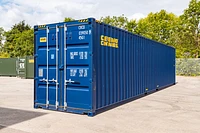
How Much Do Storage Containers Cost?
Need to buy a container but unsure how much you can expect to spend? Read our guide to shipping container costs and prices based on size, type, and more.
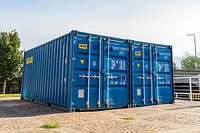
Why Hiring Shipping Containers is Beneficial for Your Business
Hiring shipping containers for your business instead of purchasing them outright can be a flexible and sustainable option to reduce risk and protect finances.
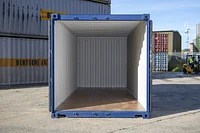
How to Choose the Right Size Shipping Container
Not sure what size shipping container you need? Cleveland Containers explains every size from 8ft to 45ft and what each one is best suited for.